
A Complete Guide to Ergonomics, Comfort, Productivity, and Workplace Retention in Modern Offices
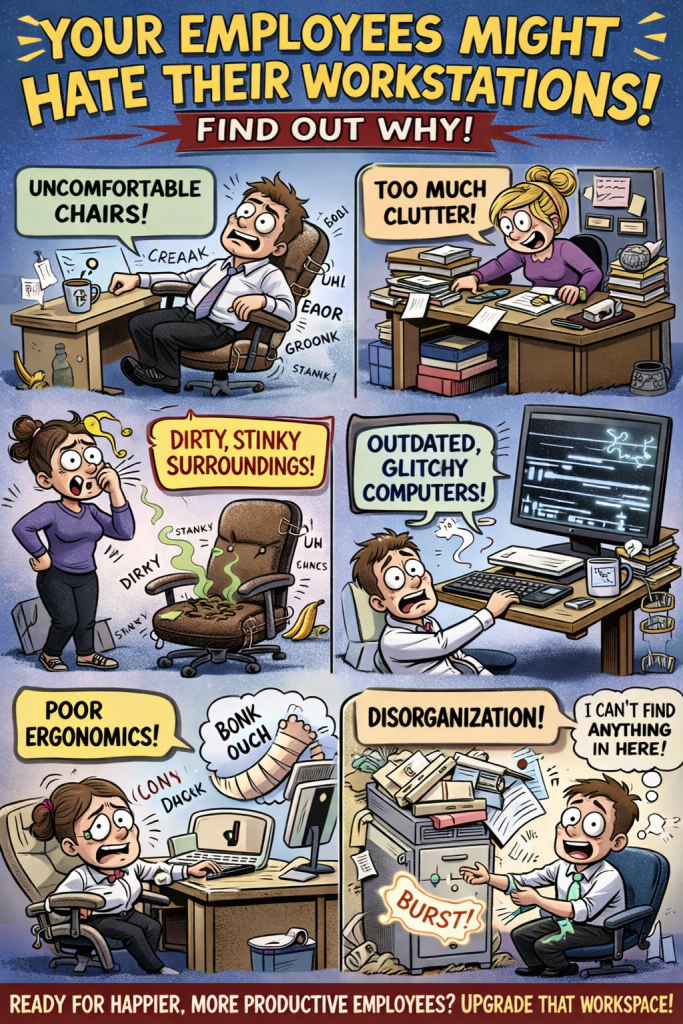
If you’ve been hearing more complaints about desks, chairs, or workspace layouts lately, you’re not alone. Find out why, across offices from Oldsmar to Tampa, business owners and managers are noticing a growing trend: employees are more vocal than ever about their work environments.
But these complaints are rarely just about furniture—they’re about how the workspace is impacting daily comfort, health, productivity, and even job satisfaction. And if ignored, they can quietly affect your bottom line through decreased performance, increased absenteeism, and higher turnover.
So, why are your employees complaining about their workstations—and what can you do about it?
The Real Cost of Poor Workstations
At first glance, upgrading office furniture may feel like an unnecessary expense. However, poorly designed workstations can cost businesses far more in the long run.
When employees spend 8+ hours a day in uncomfortable conditions, it leads to:
- Chronic back, neck, and shoulder pain
- Reduced focus and productivity
- Increased fatigue throughout the day
- Higher rates of sick leave and burnout
- Lower morale and engagement
Over time, this creates a workplace culture where employees feel unsupported—and that can directly impact retention. Employees who feel physically uncomfortable at work are far more likely to look elsewhere.
Understanding Ergonomics: More Than Just a Buzzword
Ergonomics is the science of designing workspaces that fit the user—not the other way around. And it’s one of the most critical factors in creating a productive, healthy office.
An ergonomic workstation considers:
- Proper chair support for the spine
- Desk height that aligns with natural arm positioning
- Monitor placement to reduce neck strain
- Keyboard and mouse positioning to avoid wrist fatigue
- Lighting and acoustics that support focus
When these elements are properly aligned, employees can work more comfortably and efficiently, without unnecessary physical strain.
Common Workstation Complaints (And What They Really Mean)
1. “My chair is uncomfortable.”
This is one of the most frequent complaints—and for good reason. Many office chairs lack proper lumbar support, adjustability, or cushioning.
What it means:
Your employees are likely experiencing back pain, poor posture, and fatigue, all of which reduce productivity.
2. “My desk is too small (or too big).”
Workstations that don’t match the employee’s tasks can quickly become frustrating.
What it means:
Employees don’t have enough space to work efficiently—or they’re overreaching and straining due to poor layout.
3. “I’m always tired by the end of the day.”
Fatigue is often linked to poor ergonomics and lack of movement.
What it means:
Employees may be sitting in static positions for too long or using furniture that doesn’t support healthy posture.
4. “I can’t focus with all this noise.”
Noise complaints are often tied to open office layouts and lack of acoustic solutions.
What it means:
Your workspace may be missing sound-absorbing elements, leading to distractions and reduced concentration.
5. “I feel cramped or disconnected.”
Workspace layout plays a major role in how employees feel throughout the day.
What it means:
Your office design may not be supporting collaboration, privacy, or comfort effectively.
The Link Between Workstations and Productivity
When employees are comfortable, they perform better—it’s that simple.
Studies consistently show that ergonomic improvements can lead to:
- Increased productivity by up to 20%
- Fewer workplace injuries
- Better focus and concentration
- Higher job satisfaction
Think of your office furniture as a productivity tool, not just a cost. The right setup allows employees to focus on their work—not their discomfort.
How Poor Furniture Impacts Employee Retention
In today’s competitive job market, employees have options—and workplace comfort is becoming a major factor in job satisfaction.
If your office environment is outdated, uncomfortable, or poorly designed, employees may:
- Feel undervalued
- Experience daily frustration
- Seek opportunities with companies that prioritize their well-being
On the other hand, investing in quality workstations sends a clear message:
“We care about your health, comfort, and success.”
That message goes a long way in building loyalty and retaining top talent.
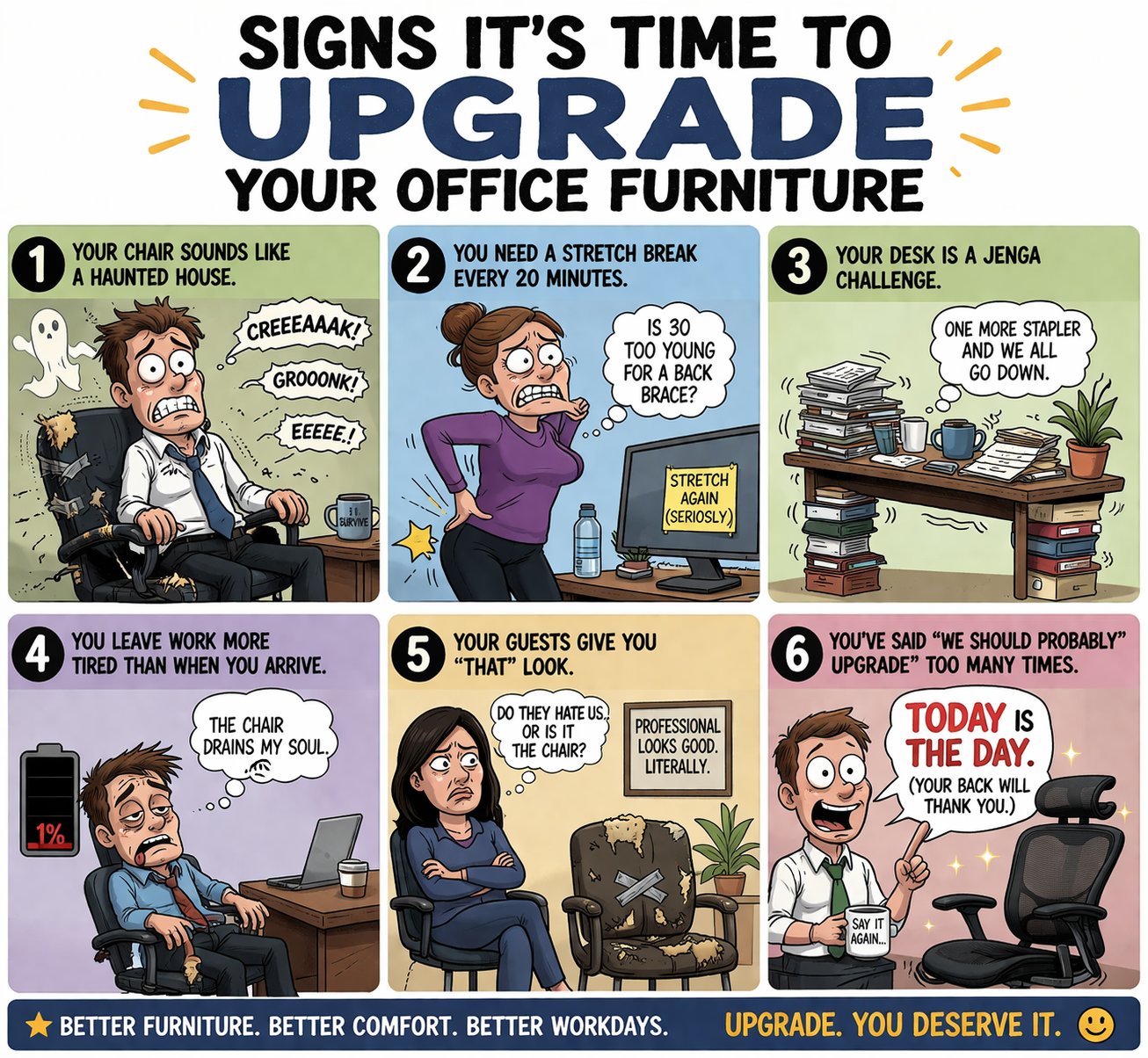
If you’re unsure whether your workspace needs an upgrade, look for these warning signs:
- Frequent complaints about chairs or desks
- Employees bringing in their own cushions or equipment
- Visible wear and tear on furniture
- Increased absenteeism or fatigue-related issues
- Difficulty attracting or retaining employees
If any of these sound familiar, it’s time to take action.
Solutions That Make a Real Difference
1. Ergonomic Seating
Invest in adjustable chairs with lumbar support, breathable materials, and customizable features.
2. Height-Adjustable Desks
Sit-stand desks allow employees to move throughout the day, improving circulation and reducing fatigue.
3. Proper Workspace Layout
Ensure each workstation is designed for the tasks being performed, with enough space for equipment and movement.
4. Acoustic Improvements
Adding sound-absorbing panels or partitions can dramatically improve focus and reduce distractions.
5. Personalized Workstations
Not every employee is the same—flexible furniture options allow individuals to adjust their setup to fit their needs.
The Competitive Advantage of a Well-Designed Office
Upgrading your workstations isn’t just about solving complaints—it’s about creating an environment where employees thrive.
A well-designed office can:
- Boost productivity and efficiency
- Improve employee morale and engagement
- Reduce turnover and hiring costs
- Enhance your company’s professional image
- Support long-term business growth
In today’s workplace, comfort and functionality are no longer optional—they’re essential.
Final Thoughts: Listen to What Your Employees Are Telling You
Employee complaints about workstations are not something to ignore—they’re valuable feedback.
They’re telling you:
- What’s not working
- What’s affecting their performance
- What could be improved
By addressing these concerns proactively, you’re not just upgrading furniture—you’re investing in your people.
And when your employees feel supported, comfortable, and valued, the results speak for themselves.
Ready to Transform Your Workspace?
If your team is experiencing discomfort, distractions, or frustration with their workstations, now is the time to act.
A smarter, more ergonomic office isn’t just a luxury—it’s a necessity for modern businesses looking to stay competitive and keep their employees happy.
Listen to Our Latest Podcast : The Hidden Cost Of Bad Workstations
Check Out Our Manufacture’s Catalogs:
https://www.ais-inc.com/products/cat/storage
https://view.publitas.com/hon-company/furniture/page/1
Contact Us: sales@office-worx.com
