
How to Know What Workstations Fit your Office?
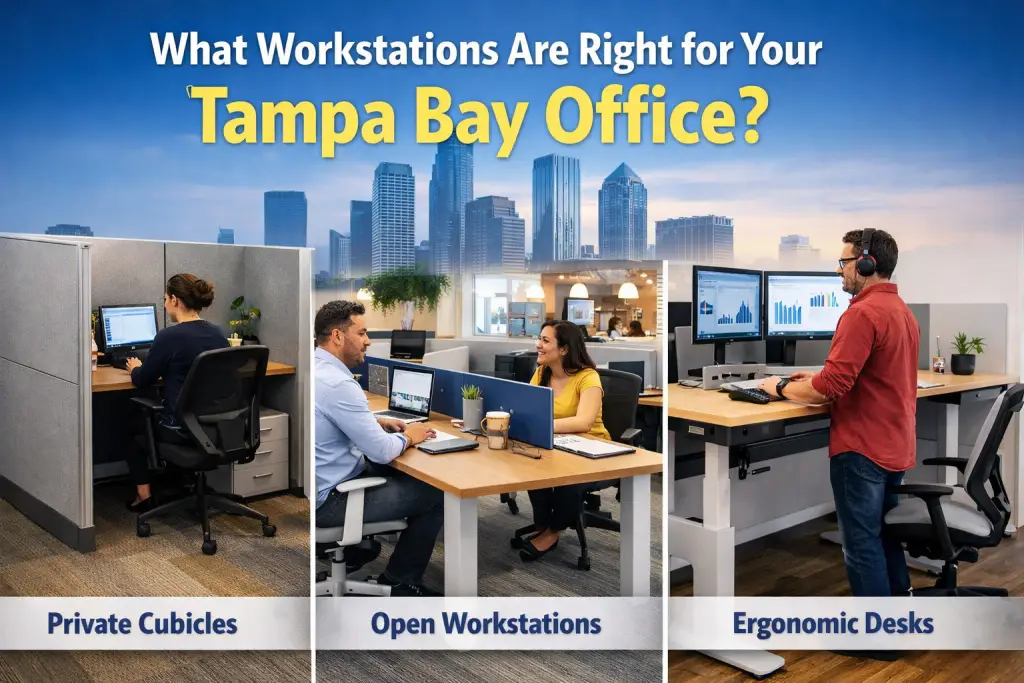
This featured image illustrates three common types of office workstations used in modern workplaces. On the left, a private cubicle setup shows an employee working at a desk surrounded by tall acoustic panels designed to provide privacy and reduce distractions. In the center, an open workstation layout shows two employees collaborating across a shared desk in a modern open office environment, representing a workspace designed to encourage teamwork and communication. On the right, an ergonomic workstation features a height-adjustable standing desk with dual monitors, demonstrating a setup focused on employee comfort, flexibility, and productivity. The image highlights the different workstation options businesses may consider when designing or upgrading their office layout in the Tampa Bay area.

Choosing the right office workstations may seem simple at first. Many companies assume a desk is just a desk, or that cubicles are all basically the same. But in reality, choosing the wrong type of workstation is one of the most common office furniture mistakes businesses make. The layout and style of workstations you choose […]

Still Working in 1925? Your Team Feels It.
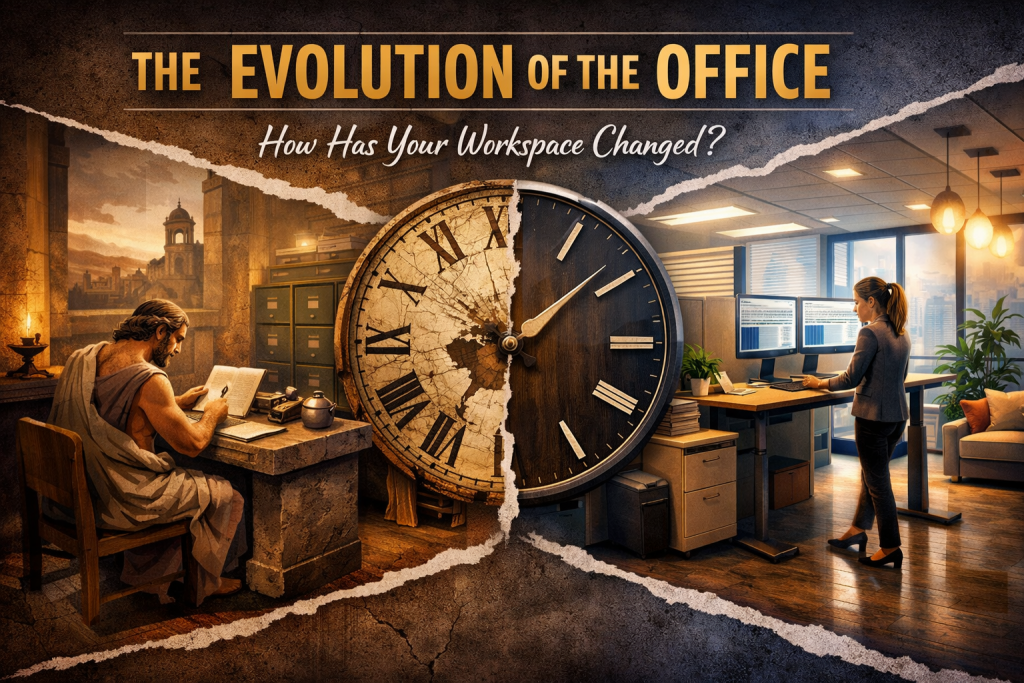
This image is a split-era visual narrative showing the dramatic evolution of the workplace over time. On the left side, the scene is set in an ancient or early historical era. A lone scribe sits at a heavy stone desk, writing by hand with focused intensity. The environment feels warm but austere — stone walls, candlelight, parchment, and simple tools. The mood conveys discipline, isolation, and deliberate thought. Work here is slow, manual, and deeply individual. At the center, a large cracked clock acts as the visual bridge between eras. One half is aged and weathered with Roman numerals, symbolizing timeworn tradition. The other half is clean and modern, representing efficiency and precision. The cracked divide suggests disruption, transformation, and the passage of time reshaping how work is done. On the right side, the image transitions into a modern office. A professional stands at a height-adjustable desk with dual monitors, surrounded by clean lines, warm lighting, plants, and contemporary furniture. The space feels open, intentional, and ergonomic. Work here is dynamic, digital, and designed around human comfort and productivity. Overall, the image communicates that offices are not just places to work — they are reflections of cultural values, technology, and human priorities. It visually reinforces the idea that workspace design has always influenced behavior, focus, power, and performance — even when people didn’t realize it.

From Quills to Cubicles: Is Your Office Still Living in 1925? We spend roughly 90,000 hours of our lives at work. Yet surprisingly, most of us rarely stop to examine the tools surrounding us every day. However, the history of the office reveals something fascinating: workspaces have always shaped how people think, behave, and perform. […]